A count is a sentence with math inside it. It says that something happened, that it happened to someone, that the event belongs in a category, and that the category is stable enough to compare against the next row. When the subject is death in custody, every weak assumption becomes a moral problem as well as a data problem.
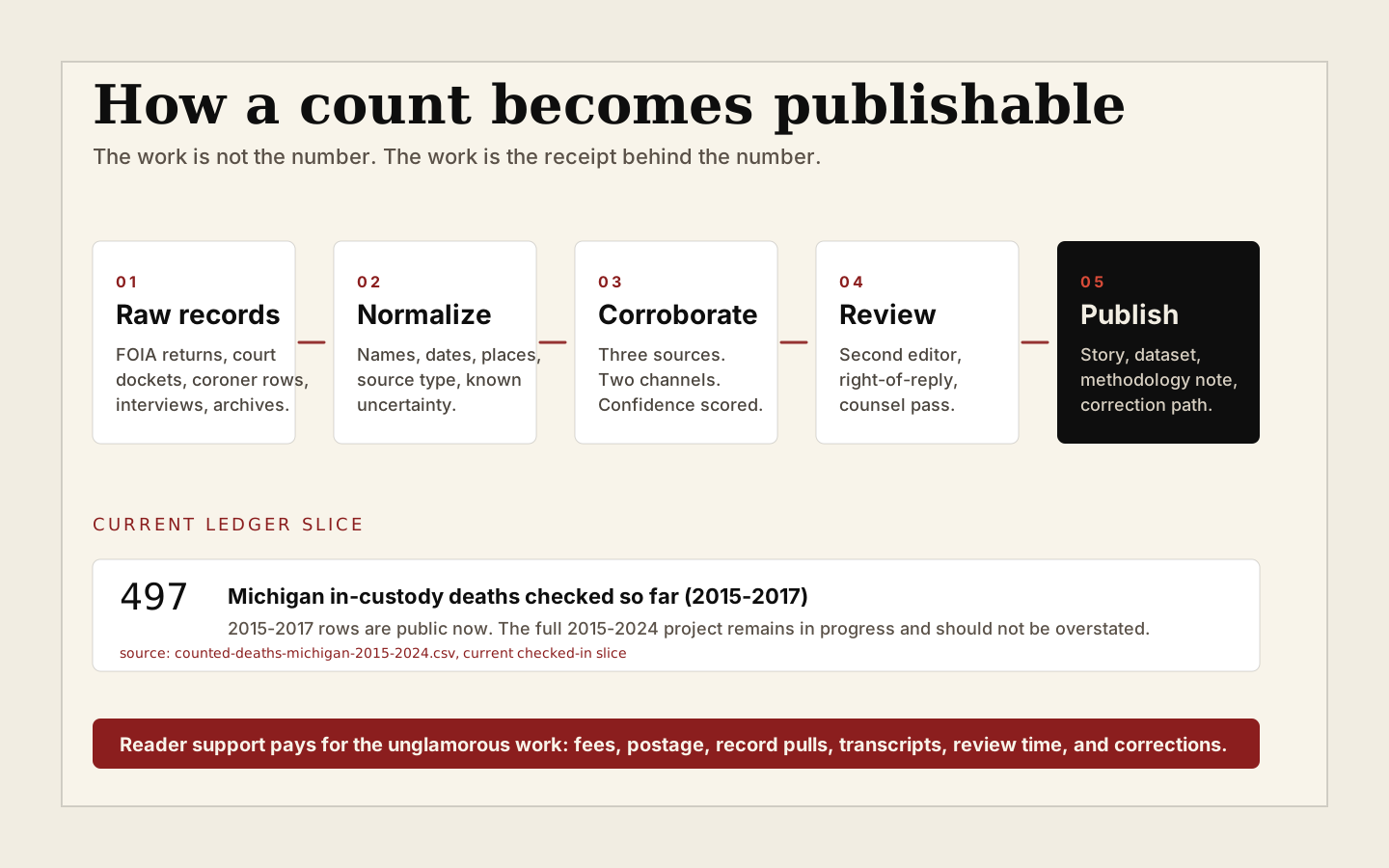
The Counted Press is starting with the public slice we can show today: 167 deaths in 2015, 158 in 2016, and 172 in 2017, for a current checked-in total of 497 rows. Those rows come from the working Michigan ledger and are labeled as a slice because that is what they are. The broader 2015-2024 project is still being cleaned, corroborated, and documented.
Why publish an unfinished slice?
Because unfinished is not the same as careless. A newsroom can make two opposite mistakes with public data. It can publish too early and turn a rough working number into a fact. It can also wait for perfect completeness and leave the public with nothing while agencies, vendors, and institutions keep moving. The honest middle is to publish the part that can be explained, mark its boundary, and keep the receipt attached.
That is why this site says "current public slice" instead of pretending the ledger is complete. The number 497 is not a grand total. It is a stable foothold: three years, one classification group, one visible source line, and a downloadable CSV that makes the claim inspectable.
The row has to survive contact
A publishable row needs more than a date and a number. It needs a source trail. It needs a facility count that does not shift under the reader's feet. It needs enough classification clarity that "natural plus other" does not become a laundering mechanism for uncertainty. It needs a correction path for the people who know the record better than we do.
Most of the work is not dramatic. It is line-by-line cleanup, naming conventions, duplicate checks, scanned PDFs, FOIA fee emails, and a second pass when the spreadsheet begins to look too neat. That last part matters. Institutional data often looks most authoritative right before it misleads you.
What this project owes the reader
First, it owes restraint. We will not inflate a partial ledger because the larger number would travel farther. Second, it owes durable files. A reader should be able to download the CSV, read the methods note, and understand exactly what the current number can and cannot support. Third, it owes updates that do not erase the past. If a number changes, the record of that change should remain visible.
The goal is not to own the count. The goal is to make the count harder to bury. If a state agency has better data, it should publish it. If a watchdog group finds an error, it should send it. If a family member sees a missing name behind one of these rows, the correction process should be easier than the original concealment.
The first 497 are a beginning. They are a receipt for the work already visible, and a promise about the work still coming: no hidden headline math, no decorative certainty, no number without a way to check it.